Can a solo Rust builder survive when 200 hunters come for his base?
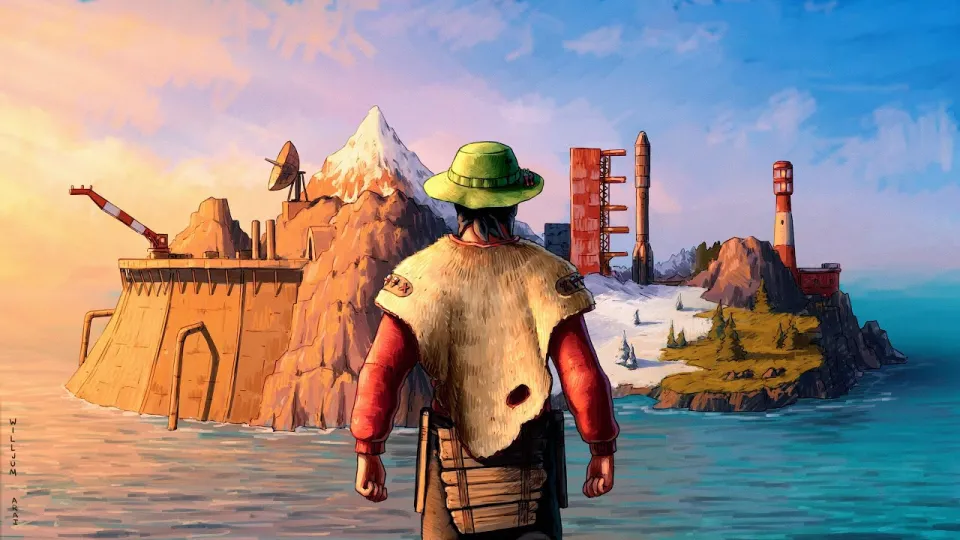
Video: When a Solo Rust builder Vs 200 Hunters...
Need articles like this for your video? They help promote it on YouTube and Google — order them in the Telegram bot @sat_sit_bot. It writes articles around your video, embeds the video and publishes them on popular niche websites (no ads). Try it free: 50 articles on us.
· based on the channel Willjum
Key takeaways
- Willjum plays the challenge solo against roughly 200 hunters hunting his base.
- The format adds a prep phase of about four hours before the assault begins.
- Every wall, door and turret has to be placed by one player with no clan support.
- The base is the only win condition: if it falls, the run is over.
- The video is a departure from Willjum's usual solo survival format, not a standard wipe.
A solo Rust builder survives 200 hunters only by treating the base as the win condition and the prep window as the real match. Willjum's challenge puts one player and one structure against a crowd of attackers, and the outcome hinges on how much work gets done before the first raider arrives. Supporters who want the extended cut and behind-the-scenes material can find it through Willjum's Patreon page.
What the solo builder versus 200 hunters format actually is
The format is a defense scenario, not a normal Rust wipe: one player builds alone while a large group of hunters is tasked with finding and destroying the base. In Willjum's video the attacker count is set at roughly 200, which turns every decision into a question of time. A solo player cannot out-fight those numbers, so the base has to do the fighting through walls, doors, turrets and traps. The prep phase is the part that matters most, because a structure finished late is a structure that never gets tested.
Why the four-hour prep phase decides the run
Four hours of preparation is the lever that makes a solo defense possible at all. That window is short for a base designed to absorb a crowd, so the build order has to be ruthless. A workable sequence looks like this:
- Secure a starter core with tool cupboards that cover the whole footprint before adding anything decorative.
- Layer stone and metal where raiders will path first, and keep sheet metal for the interior chokepoints.
- Place doors so each one costs the attackers more explosives than the last, and keep backup doors ready.
- Get auto turrets and small furnaces online early, because they work while the builder is offline or elsewhere.
- Stockpile repair materials and spare doors near the core so damage can be patched between waves.
A solo builder who spends the first hour on aesthetics loses the run. The prep phase rewards players who build ugly, layered and fast, then upgrade outward.
The base design principles that hold against a crowd
A base built for 200 hunters is designed around cost per raid, not looks. Raiders in Rust always look for the cheapest path to loot, so the job of the builder is to make every path expensive and every fake path tempting. Honeycomb absorbs the first explosions, and each extra layer of stone or metal converts an attacker's sulfur into time the defender can use. Verticality matters too: a tall, narrow core with multiple tool cupboards is harder to fully control than a wide, flat compound, because attackers have to clear several authorization zones to take the build.
Traps and turrets are the solo player's substitute for teammates. Auto turrets covering doorways, shotgun traps in tight corridors and a few well-placed bear traps turn a corridor into a grind. The single most common mistake is spreading defenses thin across a large compound instead of concentrating them around the core.
What a solo player can and cannot do against overwhelming numbers
A solo player cannot win a straight fight against a large hunter group, and the format never pretends otherwise. The realistic goals are delaying the breach, forcing attackers to spend resources, and keeping the core intact long enough to matter. Willjum's run leans on the parts of Rust that reward preparation: offline-safe defenses, redundant doors, and a build that keeps producing value even when the defender is not standing in it. Anyone who treats the challenge as a PvP test will be disappointed; anyone who treats it as a base-building puzzle will see exactly why the prep phase matters.
Questions solo builders ask before trying this
The most common doubt is whether a solo base can survive at all against numbers like these. It can survive longer than most players expect, but only if the build is layered, the turrets are placed before the assault, and the defender resists the urge to fight outside the walls. A second frequent question is about resources: a defense base needs a stockpile of stone, metal fragments, wood and low-grade fuel, and running out mid-raid is the same as losing the core.
A third theme is scaling the challenge. Running the same scenario as a duo or trio changes the math considerably, because two players can repair and defend in shifts while one keeps building. A prep window longer than four hours would also shift the balance heavily toward the builder, which is why the short window is the interesting part of the format. Finally, players ask about server rules and population: a challenge like this depends on a controlled event server rather than a live wipe, since 200 hunters cannot be organized on a normal map.
Useful links
- Willjum on Patreon for early access and supporter perks.
- https://www.twitch.tv/willjum for live streams and event runs.
- https://twitter.com/willjum1 for schedule and challenge announcements.
- http://creativecommons.org/licenses/by/4.0/ for the music licensing terms referenced in the video.
The takeaway for anyone building alone in Rust
The solo-versus-200-hunters challenge works because it strips Rust down to its core tension: preparation against numbers. Willjum's run shows that a lone builder's best weapons are build order, layered materials and defenses that keep working without a player behind them. It also shows the limits of solo play, since no amount of clever design replaces a second pair of hands during a sustained raid. The video is a departure from the channel's usual solo survival format, and it is worth watching as a case study in base design rather than as a PvP highlight reel. If you want more of this kind of experiment, supporting the channel through Patreon is the most direct way to make longer and more ambitious runs possible.
Source: When a Solo Rust builder Vs 200 Hunters... · Markdown version
Questions & answers
How does a solo player survive against 200 hunters in Rust?
By treating the base as the objective instead of fighting. Layered honeycomb, redundant doors, auto turrets and traps force attackers to spend explosives and time on every step. The builder's job during the assault is to repair, replace doors and keep the core sealed rather than trade shots outside.
How long is the prep phase in the challenge?
The build window is roughly four hours, which is short for a base meant to absorb a crowd. That limit is what makes the format interesting: the builder has to prioritize tool cupboard coverage, core layering and turret placement before anything cosmetic.
Would this challenge be easier as a duo or trio?
Yes, considerably. A second player allows shift-based defense and repair while the other keeps building or resupplies, which removes the biggest solo weakness. Viewers regularly ask for duo and trio versions for exactly that reason, since the numbers stop being purely one-sided.
Is this a normal Rust wipe or a special event?
It is an organized event rather than a standard server wipe. Coordinating roughly 200 hunters requires a controlled server and a set schedule, so the run follows its own rules instead of normal map population and raid timing.